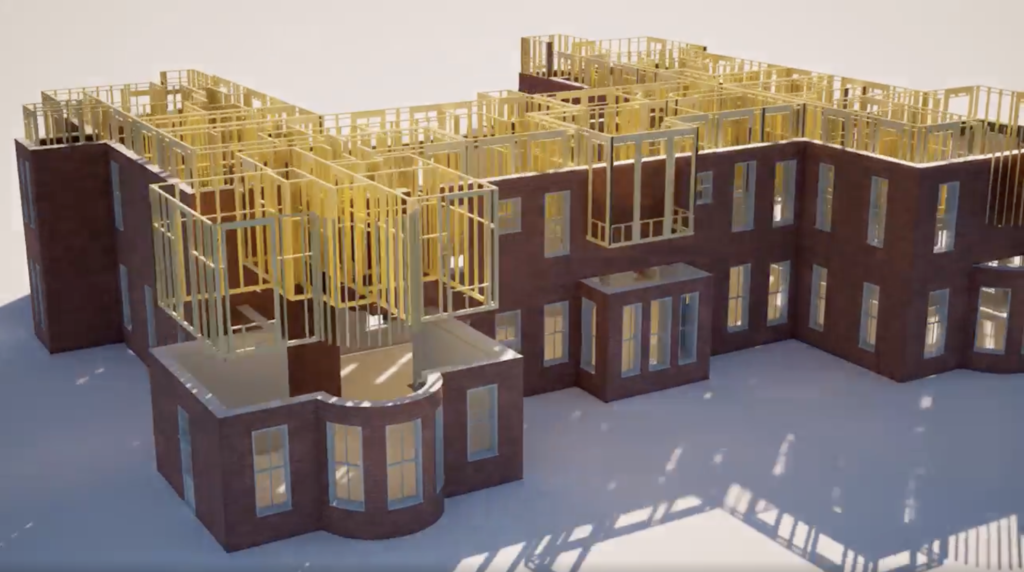
As the pressure mounts for the UK construction industry to hit net zero targets, the conversation around sustainability has shifted. No longer just about how homes perform once they are built: it is now about what they are made from, how they are assembled and what carbon costs are locked in before the first resident ever turns the key.
At Sydenhams Timber Engineering, we have spent decades working with developers, housing associations and architects to deliver high-performance homes using timber frame. And we believe that tackling embodied carbon isn’t just possible… it is already happening.

The Unseen Emissions Problem
While much of the policy and public attention has focused on operational emissions—heating, lighting and appliances—research consistently shows that more than half of a new home’s lifetime carbon footprint comes from its materials and construction. Before anyone moves in, the bulk of a home’s emissions have already been set in stone… or in many cases, in concrete, steel and brick.
Dean Orchard, Managing Director at Sydenhams Timber Engineering, explains:
“There’s no route to net zero homes that doesn’t deal with embodied carbon. Timber frame gives us a ready-made solution; it’s low-carbon, fast to erect, and it supports better energy performance from day one.”

Why Timber Frame?
Compared to traditional masonry builds, timber frame construction dramatically reduces embodied carbon. Wood is renewable, naturally stores carbon and requires less energy to produce, transport and install than concrete or steel. But it is not just about the material; it is also how it is used:
- Precision manufacturing means less waste and fewer deliveries to site.
- Lightweight systems reduce the need for carbon-heavy foundations.
- Speed of erection cuts down site time, energy use and disruption.
- Better fabric performance supports low-energy heating systems and airtightness.
And importantly, timber frame is adaptable. It can suit everything from single bespoke homes to large-scale residential schemes and MMC-enabled off-site builds.

Sustainable from the Start
Our own process at Sydenhams starts early. We support clients not just with the frame design and manufacturing, but with the full energy strategy; from SAP calculations and airtightness testing to helping projects meet SAP A ratings and EPC compliance.
We are already seeing the benefits on the ground. In recent developments across the UK, our timber frames have helped deliver:
- Housing schemes with SAP A ratings
- Affordable homes with significantly reduced energy bills
- Projects with built-in biodiversity features like bat boxes and hedgehog highways
- Developments that meet or exceed local planning carbon reduction targets
“Timber frame isn’t just an alternative – it’s a proven route to hitting housing delivery goals and sustainability targets at the same time,” adds Dean Orchard. “It supports faster build times and lower impact, which is exactly what the industry needs.”

What’s Next?
We know that future regulations will likely bring in stricter reporting and limits on embodied carbon. But why wait?
Clients are already responding to local requirements and sustainability ambitions by moving towards timber—not just for its environmental credentials, but for its flexibility, speed and long-term value.
At Sydenhams Timber Engineering, we are ready to support that shift with practical expertise, trusted delivery and a proven track record in sustainable construction.